Red Chair Therapy & Counselling Logo

Redchair

Freedom From Any Addiction

Freephone: 0800 530 0012

Blog

  • Website Woes -Paperwork Panic

    Website Woes -Paperwork Panic

    Website Woes or Paperwork Panic?

    The Problem?

    Ever been faced with blank screen panic, empty page anxiety? Maybe you really do want to gain that college course, or degree. Maybe it is a C.V. or a work report. Whatever it might be, it is important to you. It is part of living your rich and meaningful life and is an activity that moves you towards who and what is important to you. In my case it is currently website content. All you have to do is write an assignment, a document, a blog or any other piece of writing that others will see. You know your stuff right? You see others who appear to churn out high quality content with apparent ease! Should be easy right!

    Yet, as soon as you get near the blank page or blank screen some of this shows up. (much of it is with me right now as I type this)

    • Brian Freeze
    • Light headed
    • Brain Blindness
    • Trembling/Shaking
    • Fast Hearbeat
    • Hot/Cold Flushes
    • Sweatiness
    • Detached From Self
    • Neck/Muscle Tension
    • Tingling/Numbness
    • Unreality
    • Breathless
    • Over thinking/whitenoise

    The Solution – ACT

    I invite you to explore with me how ACT (Acceptance Commitment Therapy – pronounced ACT) can be used in your life with your struggles or stuck experiences.. This post is an example of learning to use ACT in one my life domains, specifically web development. I will share with you how ACT is applied in context of creating, building, maintaining and improving this website. I hope you may use ACT in a similar fashion, after all, with ACT, the therapist and the client are all in this together.

    Avoidant Behaviour

    Got a headache, take a pill. Flat tyre? Get it fixed. We are masters of the quick fix, and our minds can always come up with a stategy to fix or avoid a painful thought, feeling or event. However, this does not always work in the long term. Our minds are able to come up with ideas that appear to work, may work for a little while, yet really keep us stuck.

    I struggle, you struggle, we all struggle. Is the struggle worthwhile? I really struggle with writing content for this website. It hurts. I can and do avoid this pain by not writing content for my website. Often I do not notice the pain of writing, as already my mind has come up with an instant quick fix, a wandering idea, and as fast as a scolded cat, I am away from any writing pain, and into something else. This could be many behaviours, so of which for me are  deciding to do extra research, or losing myself in Amazon or maybe suddenly deciding I need a particular image for the page and then going off on a mission to take and make a “perfect” photo.  It is often as not going to the gym, or having to pop out to the shops There are many behaviours that show up when I am faced with a blank screen, blank page and an impending experience. So I act out with (avoidant behaviour).

    What do you auto pilot to as avoidant behaviour rather than write that article, that assignment? It is not good or bad, Actual, it in the short term, it fixes me with a big dose of avoidance, yet in the long term, it does nothing to help me to help more people. Then I am stuck. That also hurts, shame, guilt, frustration. I feel I am failing people by publishing a less than excellent website that can not be found when you need me. It feels pretty hopeless, to keep going round and round with the same old feelings that become the same old behaviours. Our minds are often not our friends. So, all of the above is and has been going on for me today. (yet the words you are reading are happening right now for me as I type them. How is ACT working here?)

    Woe

    Woe, something that causes unhappiness or distress.

    I get stuck and hooked with struggles in my mind, that can be seen by actions and lack of action in my world. ACT invites me to Accept uncomfortable feelings, Choose Values, Take Action. The paradox is this. Writing assignments, blogs, reports etc is difficult. Avoiding it is also unpleasant, so pragmatic choice moment alongside harsh reality check. Life hurts. I find that accepting this fact means that I can have uncomfortable feelings and thoughts whilst living by my values, or I can have them be avoiding the pain.

    Values & Committed Action

    Goals are not Values yet they can appear to be the same. I have goals with my website. It has a job to do. Be found, interest and attract people to the point where they will phone. You have goals with your work. Gain an exam result, a job, recognition, payment maybe. Goals are achievable and quite finite. Values are wider, never ending. My values align my actions with a need to support those with addictions issues, or anxiety etc.  Values of helping as many as possible translate into actions where www.redchair.co.uk will be found by search engines, retain readers and help those who are unsure to reach for the phone and call my freephone number. Values quickly become traits, characteristics, ethics, morals, which when placed at the heart of writing for this website, create a very different mental and emotional experience. The anxiety moves from unhealthy panic and anxiety, into  ongoing experience of maintaining a great quality website. Honesty in my approach to what I write. Respect to those that would read this. Consistency in turning up for the web site maintenance, development and growth. Right now, I feel quite attached to curiosity, determination, self-compassion.


    Contact With The Present Moment

    I knew all this stuff yesterday, and last week, and last month. However, this article did not appear, I was so hooked and fused with thoughts that the avoidant behaviour was fully at play. My mind also provided me with loads of stories to appease my feelings. My mind and I danced the dance again and again. What changed, and often needs to change, is the pause button. The ACT mindfulness of breathing around the anxiety. Choosing to notice the 5 Senses, grounding into the hear and now. Then, naming values. Really connecting with values.

    I took a moment to centre myself in the Here & Now. All of the anxiety attached to an article, assignment, blog or web page content is I notice under the “You, There and Then” mind set. It is fueled by comparing my work with the best of the net. I it judged harshly by anybody and everybody I can perceive. My mind is at work preventing me from doing what is happening right now, just sitting at a keyboard typing away. Yet, when I accept the unwanted thoughts and feelings as just being present, not to fight with or run from, just to let them sit there, I, we, You, all have a simple choice. We connect with our values and turn this into a behavior that can be seen. Writing, typing etc, or we can connect with the anxiety and panic, acting on all that those feelings can stimulate. We just get a choice.

    All our behaviours have consequences. Avoidant behaviour moves us to a short term fix – Short Term Gain, Long Term Pain. Values are what we strive for and committed action in line with our values moves us towards who and what is important to us. Long term gain, short term pain.

    In my quest to help you, your families, your friends to find solutions regarding addiction issues, it would help if you knew how I can help, Where to find me, and what I have to offer. So, we must have a website, and this one is mine. www.redchair.co.uk. It is not very good. There are many aspects of my site which are letting me down, and this is my quandary. Whilst the website could be a lot better in helping me to help more people, it is also helping me. The challenge of learning to host a website, to run a server, to create WordPress database, register domain names, setup email servers, create images, upload and transfer files, learn HTML5 and CSS3 etc is something I could pay someone to do. More than one person has looked at me and said, you should not go near the website. Pay for a good one. I get that. I can see how that would be better for search engine optimisation. Also, I am sure it would look great.

    Woe is Me, I am me

    Got a story of who you are? I do. What is your “I AM” narrative, rules, descriptions. What owns you? Here is a bit of mine.

    I am a therapist, a father. We grew up where farming was the career of choice, academic work frowned upon. I am rubbish at grammar. I am never going to be able to write good content. I am to old to learn new tricks. I am not needed in the addiction treatment field. I am not very bright. I am unable to complete written work. I am a failure at assignments and exams.

    Hooked into all of that, I struggle and suffer when faced with an opportunity to start writing content for anything. In the past it was college assignments. Currently it is a profile for some websites that keep offering to promote my services.

    What are you aligned with, hooked into that keeps you stuck?

    ACT looks to help us step out of the rigid inflexible “I Am ” narratives, rules, comparisons. The ACT metaphor is the Chessboard. Often we can align our mental, emotional, spiritual private struggles to a the pieces on a chessboard. We are the battle, the moves, counter moves, defenses, attacks. Every thought we have, experience we take becomes another group of chess pieces on this infinite board or ever expanding chess. We also notice that pieces never leave the board, sometimes charging from years ago to join in battle with the latest pieces on the board.

    We are not the fighting pieces, and we can not get rid of them. How about this? ACT suggests that we are the place where the fight takes place, that we are not the fight. We are the chessboard, not the pieces. If you are the board, not the pieces then you have some flexibility. You can keep moving yourself towards the life values of who and what is important to you, or you can dive into the control agenda of the fight, and find yourself becoming the struggle. The fight is there, yet we can take a perspective on that, and be free to notice the fights, yet still do what we values doing. Of  course that means that if we are the chessboard, and we move towards our values and goals with committed action, then the fight, the struggle comes along as well.


    www.redchair.co.uk or www.theinterventionservice.co.uk are a great big miracle for this recovering alcoholic and addict. I might dig out my school reports and scan them in, upload the images and post them on here someday, and you will see why these sites are quite an achievement for this intellectually challenged individual. (Self As Content)

    I picked up alcohol with a vengeance from a young age, impacting seriously on my educational abilities. Drugs did for my career, finances, relationships in a tsanmi kind of way. When I put down the alcohol in 1993, and then a last gasp on the drugs, finally gaining total abstinence in 1995 it was time for a reality check and a reckoning,

    This website is a source of great woe for me, bringing up feelings of frustration, anxiety, apathy, pointlessness.  [breathe in, breathe out].

  • ACT for Depression

    ACT for Depression

    ACT for Depression: Navigating the Challenges of Addiction and ADHD

    Depression is a common and profoundly challenging experience for those navigating untreated addictions and ADHD. These conditions often intertwine, creating a cycle of burnout, poor lifestyle habits, and emotional exhaustion that can feel overwhelming. But depression doesn’t have to dictate your life. With the right approach, you can move toward a life that aligns with your values and purpose, even in the presence of this struggle.

    Acceptance and Commitment Therapy (ACT) offers a practical, empowering framework to help individuals break free from the grip of depression. It’s not about erasing pain or chasing happiness; it’s about learning how to respond effectively to life’s challenges and taking meaningful steps toward the life you want to live.


    The Costs of Untreated Depression in Addiction and ADHD

    Untreated depression often amplifies the challenges of addiction and ADHD, leading to:

    1. Emotional Isolation: Depression fosters withdrawal from friends, family, and support systems, reinforcing loneliness.
    2. Self-Medication Cycles: Many turn to substances or destructive behaviours to numb the pain, deepening dependency and delaying recovery.
    3. Impaired Focus and Motivation: ADHD already challenges focus and energy, but depression can exacerbate these struggles, making daily tasks feel insurmountable.
    4. Relapse Risks: Depression is a major trigger for relapse in addiction recovery, as feelings of hopelessness push individuals back toward old coping mechanisms.
    5. Physical Health Decline: Poor diet, lack of exercise, and sleep disruption—common in untreated depression—take a significant toll on physical well-being.

    Without treatment, these patterns can spiral into a deeper sense of disconnection and despair, making recovery seem unattainable.


    The Benefits of ACT for Depression in Addiction and ADHD Recovery

    ACT provides a fresh perspective and powerful tools to navigate depression. Its benefits include:

    1. Breaking the Avoidance Cycle

    Depression often leads to avoidance—avoiding people, activities, and emotions. ACT helps you confront what’s hard, not by fighting it, but by learning to coexist with discomfort. This reduces the grip of avoidance and allows you to re-engage with life.

    2. Unhooking from Painful Thoughts

    Depression thrives on painful thoughts: “I’m not good enough,” “This will never change,” or “Why bother?” ACT teaches techniques like defusion, where you learn to see thoughts as just words rather than absolute truths. This unhooking process frees you to act according to your values rather than being controlled by your mind.

    3. Reconnecting with Your Values

    When depression narrows your focus, everything can feel meaningless. ACT shifts attention back to your core values—what truly matters to you. Whether it’s building meaningful relationships, pursuing a creative passion, or caring for your health, reconnecting with your values provides a sense of purpose, even in the darkest moments.

    4. Taking Small, Meaningful Actions

    ACT focuses on committed action—taking small, achievable steps aligned with your values, even when motivation is low. These actions gradually rebuild momentum, helping you move out of stagnation and into a life of purpose and fulfilment.

    5. Anchoring in the Present

    Depression often drags you into regrets about the past or fears about the future. ACT incorporates mindfulness to ground you in the present moment, creating space to observe your experience without being overwhelmed by it.

    6. Redefining Your Relationship with Depression

    ACT challenges the belief that you are your depression. Instead, it helps you step into a broader sense of self—recognising that depression is part of your experience but not your identity. This perspective shift can be liberating, offering new ways to relate to pain without being consumed by it.


    Costs and Benefits at a Glance

    Untreated DepressionACT for Depression
    Emotional isolation and strained relationshipsReconnection with values and meaningful relationships
    Risk of relapse into addictive behavioursBuilding resilience and breaking cycles of avoidance
    Worsened ADHD symptoms, such as inattention and impulsivityImproved focus and actionable steps toward goals
    Physical health decline due to poor habitsMindful engagement in healthier lifestyle choices
    Hopelessness and disconnectionRenewed sense of purpose and direction

    Why ACT is Different

    ACT doesn’t promise to eliminate depression—it focuses on transforming how you relate to it. Rather than fighting against the struggle, ACT helps you acknowledge it, make room for it, and still take meaningful steps forward.

    This approach is especially effective for those with addictions and ADHD, as it works with the unique challenges of these conditions, teaching practical strategies to handle the discomfort and overwhelm they often bring.


    Moving Forward

    Depression in the context of addiction and ADHD is a real and painful experience, but it doesn’t have to define your life. With ACT, you can learn to navigate these challenges with courage, compassion, and purpose. Whether you’re in recovery, managing ADHD, or simply feeling stuck, this approach offers a way to live a life that feels aligned with what truly matters to you.

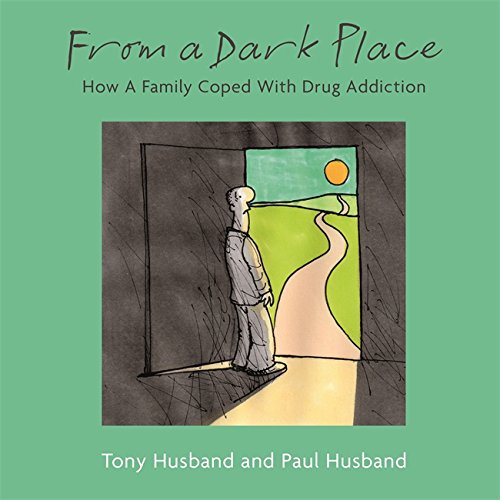
  • From A Dark Place. Tony & Paul Husband

    From A Dark Place. Tony & Paul Husband

    From A Dark Place goes beyond words to a place that is beyond words in this emotive share of a family visited by addiction.

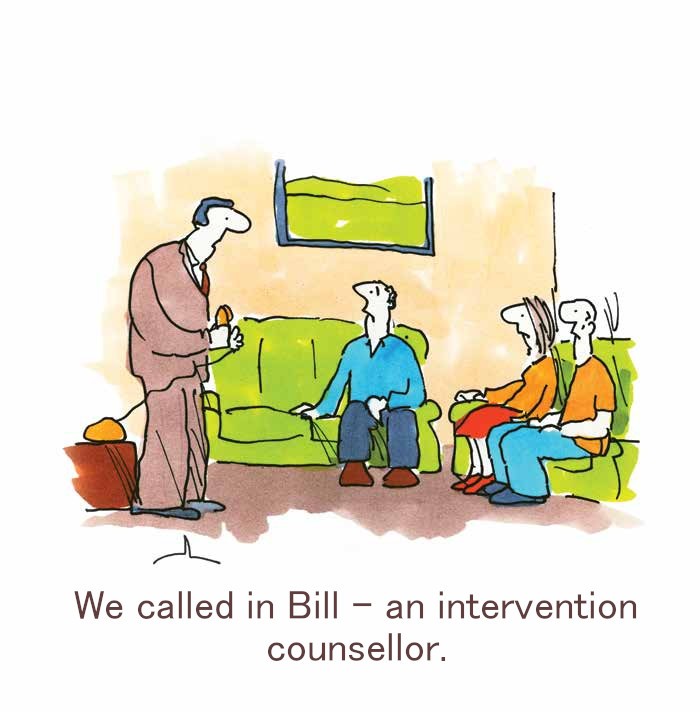
    It was my privilege to visit and support this family. Tony Husband shows his skills in conveying the hell and heaven visited upon them all by addiction and then emergence into recovery and freedom.

    The book is available this week on Amazon. Order it here.
    From A Dark Place: How A Family Coped With Drug Addiction

    Thank you Tony for showing the day I came to help. Well done Paul for accepting the help.

    Thankyou for being part of Paul’s recovery you came at our lowest point and started the process. (Tony Husband 2017)

  • ACT Just For Today

    ACT Just For Today

    ACT Today

    It is likely that 90% of what you think about, that overwhelms, challenges, induces stress etc is not actually happening in the here and now, but  our minds looking out for threats. Being able to ground yourself in the here and now as often as possible is a useful tool.

    I invite you to choose to notice, to really notice,  what are you seeing right now, hearing right now, touching right now, tasting right now and able to smell right now?

    Choosing to notice the difference between our minds activity about our reality and our reality is often the key to a rich and meaningful life today.

    We are not our thoughts, but we do have them. “I am having the thought that…” and then “I am noticing I am having the thought that…..”  This is a pragmatic and flexible approach to our thoughts. I invite you to notice your thoughts you are having, to perceive them. Some are really useful and need action in the here and now. 90% are just our minds doing what our minds do.

  • It’s Football

    It’s Football


    To you heroes of the roundball game, who come rain or shine, lace up the boots, pull on the shirt and take to the field, I wish you well.
    Prepare yourselves well. Your kit, your body, your mind and your soul.
    Improve. There is one thing you can improve upon each and every game, in every corner of the pitch, in every minute, in every moment, you can improve. Yourself.
    Set yourself goals as naturally as you would breathe. Set personal goals for each and every gym session, training session, every meal you eat and every game you play. You can improve.


    So, today, wherever you play, may you take to the field with your mind, your heart, your body, your soul, your desire, your character and all that you are, secure in the knowledge that you are a King, a player of the wonderful game, privileged to step out onto the green stage, to perform and bring life to all who feel every moment with you.

    All the best for today.

    Its Football.

  • V.A.T.’s – Value Added Thoughts

    V.A.T.’s – Value Added Thoughts

    Just For Today. V.A.T.

    What if, rather than being dictated by our automatic thoughts, every action we took today was mindfully connected to our principles and values of choice?

    True mental freedom can never be about disputing thoughts and fighting against them. True freedom is the learned ability to difuse from the content and notice the nature and pragmatic usefulness of a thought. If it’s useful, go ahead and act on it; if not, then accept its presence and pass. Quite simply, you are not your thoughts; you have your thoughts.

    Acceptance Commitment Therapy (ACT) promotes mental liberation via the practise of a higher perspective and an observant self (called defusion). The paradox is that the less you oppose thoughts, the less they stick around.

    Our minds are filled with thoughts, most of which are in service of anxiety, fight-or-flight instincts. Our minds have been evolving for a long time, but they are still lagging behind in terms of modern living. There is rarely any risk that necessitates dread, rage, worry, or paranoia, but our minds are incapable of accepting that rationale. They are preoccupied with identifying and mitigating any risk, even if it is merely an idea in the first place. 

    To choose to open up to our values in the present moment is a practical, adaptive, and compassionate way of living. We must practice because our minds do not do this automatically.

    Values serve as a lens through which to evaluate the effectiveness of any ideas. The basic choice is whether these thoughts pull me closer or further away from my principles. On this anvil of truth, one can act with confidence.

    Bill Stevens

  • Feel Stuck? Intervention ACT now.

    Feel Stuck? Intervention ACT now.

    ACT Interventions

    Ground-hog day behaviours, feelings, same old same old?

    ACT Interventions move everyone towards goals and away from stuck patterns.

    Acceptance Commitment Therapy, A.C.T. suggests we only move towards goal in ways conducive to our values. Sometimes this is really difficult, but we accept the difficulty, even if we could avoid discomfort by old patterns of avoiding, procrastinating, or in the case of family interventions, enabling.

    Enabling is an away behaviour used to give short term avoidance of fear, shame, guilt, hopelessness, but it is an away behaviour. It resolves nothing for the family, or the addict who still suffers.

    Acceptance Commitment Therapy underpins process interventions in a simple practical manner.

    Bill Stevens is a specialist addictions therapist who uses Acceptance Commitment Therapy within the Family Intervention process.

    If you are stuck with another persons untreated addiction we can help. 0800 5300012

  • Get in on the A.C.T. Acceptance Commitment Therapy

    Get in on the A.C.T. Acceptance Commitment Therapy

    A.C.T. Acceptance Commitment Therapy

    Get in on the A.C.T. 3rd Wave behavioural therapy

    What are you Stuck with? What thoughts and behaviours would you like to be released from, the ones you feel will by with you for always. You adapt, you cope, but really you wish you could shake them off, be free to see, move and feel your world in an open, present and felt manner.

    A.C.T is a simple hear and now therapy that moves you towards the experience you have named, removes you from the groundhog day of repeated stuck patterns, behaviours.

    A.C.T. fits very well with addiction treatment. Taking the psychology of the 12 step program, the logic and strengths and presenting them in way that is workable and receivable, in a manner and language for the 21st Century.

    Teaser:

    Your Brain is not your friend. You are not your thoughts.

    You can “notice” thoughts, accept them, and still carry on moving towards your goals, unhindered by a thought that used to stop you in your tracks, or have you scrabbling to avoid situations or sensations with well worn patterns.

    Values plays a large part in ACT, as do SMART goals. Stuckness is noticed, but left behind. Value based living works in the present, the here and now.

    Mindfulness on top of CBT is one way of describing A.C.T.

  • They said “No”, and are still out there, using.

    They said “No”, and are still out there, using.

    They said “No”

    This happens. You gather, you offer love, you offer treatment and nothing. However, Family Intervention is about Intervention on the family illness as well, the fear, the pain, the enabling that alleviates these feelings. This is part of an email to a mum who is in day 3 of waiting whilst the loved one continues. 

    Dear Family Member,
    You are so worried that she is lonely, but talking to others in the group has helped.
    We may or may not be able to project exactly how she feels, rarely do we know the true extent of another’s person’s feelings. Our own needs to feel proactive, or helpful, or to relieve our own discomfort of having to wait, often means we will project a thought in order to justify our own actions.
    So, I really appreciate the power you and the other group member have, to talk about this and not act out on the urge. That is not easy.
    A using drug addict does and will need family, so as you wait, they will come to you. Maybe in anger, or sadness, humour or distress, but they will come to you. By phone or in person, text or email, they will come to you and will try to make you take care of her problems. 
    So, be patient, and always talk to them where everything comes second to him/her putting down the drugs, and the offer of help you have for them. 
    Unless there is a very real risk of harm, (always call the emergency services), then be loving, firm and resolute. 
    I suggest you all meet and read a chapter out of Love First together soon, discuss it in the way we met and were able to listen to each other, to process our fears and hopes. Do invite him/her to the gathering, regardless of the response, meet anyway.  Offering treatment to a lonely person is not wrong, but with drug or alcohol addiction, how you do it is crucial.
  • Bill Stevens Presenting @ Recovery+ & Intervention+

    Bill Stevens Presenting @ Recovery+ & Intervention+

    Training, Education, Insight, Opportunity, Networking, Credits….

    Recovery Plus: 22 May 2015, Hilton London

    Save time, save lives – do you increasingly encounter patients/clients with alcohol or drug problems? If so, benefit from this intense fully-rounded ‘crash course’ in how to recover from addiction: from the basics to neuroscience to mutual-aid groups to LGBT, BME, factors in the elderly vs youngsters, and more. You will meet more people and learn more at Recovery Plus than you could from months of research. Organised in response to demand: www.recoveryplusdb.com.

    Interventions Plus: 23 May, Hilton London

    Speed reluctant addicts into recovery – for families and professionals who want to add a 2nd string to their career. Chaired by Rebecca Flood, immediate past president of the Association of Intervention Specialists.

    Bill Stevens C.I.P.  of RedChair is a guest speaker and will be presenting on Friday Afternoon, and is part of the panel on Saturday.


    Please sign up and attend this fantastic event with speakers from all over the world. Hear what you need to from the best in the business.